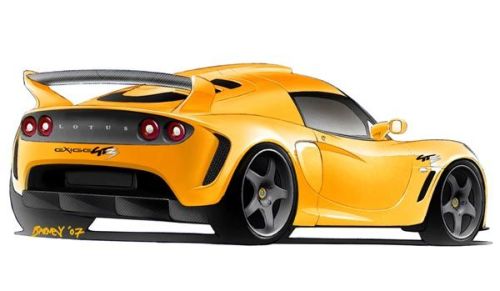
Lotus Exige S model


The Lotus Exige, appreciated by purists of the guide for his proverbial agility, builds the trick and Geneva shows aerodynamic improvements that help to increase performance while reducing consumption and pollutant emissions. For the rest, the sport with the effigy of the lotus flower remains true to itself and is preparing to debut on the market in a Model Year 2010 in the month of May. Looking at the front of the car you can see the openings for the inlet from the more generous dimensions and a spoiler that extends across the lower front to divert the air from the front wheels.

In the back is mounted a new wing and larger places with attacks at both ends. This includes the design shown in the Lotus at the Geneva Motor Show in 2007 on the Exige GT3 concept and provides a value of 42 kg of downforce at the speed of 160 km / h.

The aerodynamic improvements, combined with the lightness of the car which, thanks to the aluminum chassis, it weighs considerably less than 1000 kg, allowing consumption to get interesting when compared to the performance of the Exige S: 8.5 liters of gasoline to travel 100 km in combined cycle. In addition, help to reduce CO2 emissions to a value of 199 grams per kilometer. In 2009, the philosophy of Lotus founder Colin Chapman, or to obtain benefits through the light, it shows very current and in line with the spirit that pervades ecologista car.


Under Repairing

Under Repairing
sorry my site under repairing

Ladybird-Tiger Electric Roadster

Ladybird-Tiger Electric Roadster


Cracking 150 mph isn't a big deal these days, but back in 1926 it was enough to make a Sunbeam Tiger called Ladybird the quickest car on the planet. A British design student has paid tribute to that remarkable car by reimagining it as an all-electric roadster.

The concept car envisioned by Ryan Skelly would commemorate the 100th anniversary of the car Henry Seagrave drove to a record-setting 152.33 mph on March 21, 1926. It's purely a styling exercise, but we like what he's done with it.

"From the outset of the project, I wanted to create a successor to a small car from a dormant British car company," Skelly told Wired.com. "It wasn't until my friend pointed out the Tiger that I fell in love with it and restarted my project on the original 1925 vehicle. It's such an amazing little vehicle with so much heritage and a testament to the British motor industry."

The futuristic Tiger designed by the Coventry University student would be as quick as it is cool.

Seagrave made his record-setting run at Southport Beach, England, in a supercharged V-12 Tiger. Skelly updates the drivetrain in Tiger Tribute Concept, envisioning a car capable of 0 to 60 in 2.8 seconds and an electronically limited top speed of 160 mph. The 342-horsepower (255 kilowatt) motor would be powered by a lithium titanate battery with a four-hour recharge time and a range of 800 miles.